
How to Break a Weight Loss Plateau with Smart Calorie Cycling
How to Break a Weight Loss Plateau with Smart Calorie Cycling
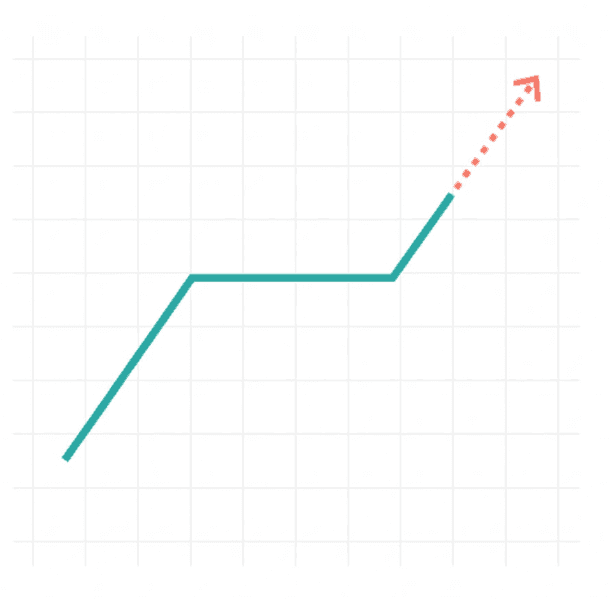
You've been doing everything right. Tracking your calories, hitting your protein goals, exercising regularly. The scale was dropping steadily for weeks—maybe even months. Then suddenly, nothing. The number won't budge.
Welcome to the weight loss plateau. It's frustrating, demoralizing, and the point where most people give up. But here's what nobody tells you: plateaus aren't a sign of failure. They're a sign that your body has adapted—and that means it's time to adapt your strategy.
In this guide, you'll learn why plateaus happen and how to use calorie cycling to break through them without starving yourself or losing your mind.
What Is a Weight Loss Plateau (And Why Does It Happen)?
A weight loss plateau is when your body stops losing weight despite maintaining the same calorie deficit that was working before.
Here's the uncomfortable truth: your body doesn't want to lose weight. From an evolutionary perspective, holding onto fat meant survival during famine. So when you consistently eat less, your body fights back.
The Metabolic Adaptation Problem
When you diet, several things happen:
| Adaptation | What Happens |
|---|---|
| Lower TDEE | You weigh less, so you burn fewer calories |
| Reduced NEAT | You unconsciously move less (fidgeting, walking, etc.) |
| Hormonal shifts | Leptin drops, ghrelin increases (more hunger, less satiety) |
| Thyroid slowdown | Metabolism decreases slightly |
| Muscle loss | If protein is too low, you lose calorie-burning muscle |
The result? The 500-calorie deficit that worked 3 months ago might only be a 200-calorie deficit now—or no deficit at all.
How to Know If You've Hit a Real Plateau
Before panicking, make sure it's actually a plateau:
- Weight stable for 2+ weeks (not just a few days)
- You're tracking accurately (weighing food, counting everything)
- No obvious water retention (high sodium, menstrual cycle, new workout routine)
If all three are true, you've hit a genuine plateau. Time to break through it.
What Is Calorie Cycling?
Calorie cycling (also called calorie shifting or zigzag dieting) means intentionally varying your daily calorie intake instead of eating the same amount every day.
Instead of eating 1,800 calories every single day, you might eat:
| Day | Calories | Type |
|---|---|---|
| Monday | 1,600 | Low |
| Tuesday | 1,600 | Low |
| Wednesday | 2,200 | High |
| Thursday | 1,600 | Low |
| Friday | 1,800 | Medium |
| Saturday | 2,400 | High |
| Sunday | 1,800 | Medium |
| Weekly Total | 13,000 | (~1,857/day average) |
The weekly average stays the same, but the daily variation creates metabolic benefits that steady dieting doesn't provide.
Why Calorie Cycling Works for Plateaus
1. Prevents Metabolic Adaptation
When your body receives consistent low calories, it adapts by slowing metabolism. Higher calorie days signal to your body that food is abundant—reducing the adaptation response.
2. Restores Leptin Levels
Leptin is your "satiety hormone." It drops significantly during prolonged dieting, making you hungrier and slowing metabolism. Higher calorie days (especially higher carbs) can temporarily boost leptin, improving both hunger signals and metabolic rate.
3. Supports Training Performance
If you exercise, consistently low calories hurt your performance. Strategic high-calorie days around intense workouts fuel better training, which preserves muscle and burns more calories.
4. Psychological Relief
Let's be honest—eating the same restricted calories every day is mentally exhausting. Knowing you have higher days coming makes the lower days more tolerable.
How to Set Up Your Calorie Cycling Plan
Step 1: Calculate Your Weekly Calorie Budget
First, determine your target weekly calories (not daily).
Example: If your daily target is 1,800 calories:
- Weekly budget = 1,800 × 7 = 12,600 calories
This is the number you need to stay under for the week. How you distribute it is up to you.
Step 2: Choose Your Cycling Pattern
There are several approaches. Pick one that fits your lifestyle:
Option A: High/Low (Simple)
- 4 low days: Target minus 300 calories
- 3 high days: Target plus 400 calories
Example (1,800 avg target):
- Low days: 1,500 cal × 4 = 6,000
- High days: 2,200 cal × 3 = 6,600
- Weekly total: 12,600 ✓
Option B: Training-Based (For Exercisers)
- Training days: Higher calories (especially carbs)
- Rest days: Lower calories (moderate protein, lower carbs)
Example:
- Training days (3x): 2,100 calories
- Rest days (4x): 1,575 calories
- Weekly total: 12,600 ✓
Option C: 5:2 Approach
- 5 moderate days: Eat at target
- 2 low days: Eat 40% below target
Example:
- Moderate days: 1,900 × 5 = 9,500
- Low days: 1,100 × 2 = 2,200
- Weekly total: 11,700 (slightly more aggressive)
Step 3: Align High Days with Your Life
This is the secret to sustainability. Schedule your high-calorie days around:
- Social events (dinner with friends, date night)
- Heavy training days (leg day, long runs)
- Weekends (when restriction feels hardest)
Low-calorie days work best on:
- Busy workdays (less time to think about food)
- Rest days (lower energy needs)
- Days you're home with controlled food options
Step 4: Adjust Macros, Not Just Calories
On high days, increase carbohydrates primarily—not fat. Here's why:
- Carbs have the strongest effect on leptin
- Carbs fuel better workouts
- Carbs cause less fat storage than dietary fat when in a surplus
High Day Macro Shift:
| Macro | Low Day | High Day |
|---|---|---|
| Protein | 170g | 170g (keep constant) |
| Fat | 55g | 55g (keep similar) |
| Carbs | 120g | 220g (increase here) |
Sample 7-Day Calorie Cycling Plan
Here's a complete week for someone with a 1,800 calorie daily average who trains Monday, Wednesday, and Friday:
| Day | Type | Calories | Protein | Carbs | Fat |
|---|---|---|---|---|---|
| Mon (Train) | High | 2,100 | 170g | 230g | 55g |
| Tue (Rest) | Low | 1,500 | 170g | 100g | 50g |
| Wed (Train) | High | 2,100 | 170g | 230g | 55g |
| Thu (Rest) | Low | 1,500 | 170g | 100g | 50g |
| Fri (Train) | High | 2,100 | 170g | 230g | 55g |
| Sat (Rest) | Medium | 1,800 | 170g | 165g | 55g |
| Sun (Rest) | Low | 1,500 | 170g | 100g | 50g |
| Total | 12,600 | 1,190g | 1,155g | 370g |
Weekly average: 1,800 cal/day — but distributed strategically for maximum metabolic benefit.
5 Rules for Effective Calorie Cycling
Rule 1: Keep Protein Consistent
Protein should stay high every day—even on low days. This preserves muscle, keeps you full, and maintains metabolic rate. Never drop protein to create a deficit; adjust carbs and fat instead.
Rule 2: Don't Go Too Extreme
Your low days shouldn't feel like starvation. A 300-400 calorie reduction from your average is enough. Going too low backfires—you'll be ravenous on high days and overeat.
Rule 3: Track Weekly, Not Daily
Stop obsessing over daily weight fluctuations. High-carb days cause water retention (carbs hold water). You might "gain" 2-3 lbs after a high day—it's not fat, it's water. Look at weekly trends instead.
Rule 4: Be Patient
Calorie cycling isn't a magic trick. It takes 2-4 weeks to see if it's working. Your body needs time to respond to the new pattern.
Rule 5: Adjust as Needed
If you're not losing after 3-4 weeks, reduce your weekly budget by 5-10%. If you're losing too fast (more than 1% body weight per week), add calories back.
When Calorie Cycling Isn't Enough
Sometimes a plateau requires more aggressive intervention:
Option 1: Diet Break (1-2 Weeks)
Eat at maintenance calories for 1-2 weeks. This isn't "giving up"—it's a strategic reset that:
- Fully restores leptin
- Reduces cortisol (stress hormone)
- Gives you a mental break
- Prevents muscle loss
After the break, return to your deficit. Many people break through plateaus immediately after a diet break.
Option 2: Reverse Diet
If you've been dieting for 6+ months, you might need to slowly increase calories over several weeks to restore metabolic rate before dieting again.
Option 3: Reassess Your Goal
If you're already at a healthy weight and the scale won't move, your body might be at its natural set point. Consider shifting focus to body composition (building muscle) rather than scale weight.
How AI Makes Calorie Cycling Easier
Manually managing calorie cycling is complex:
- Calculating different daily targets
- Adjusting macros for each day
- Tracking weekly averages
- Knowing when to adjust
This is where adaptive AI nutrition apps shine. Instead of spreadsheets and mental math, an AI coach can:
- Automatically vary your daily calories based on your schedule
- Adjust macros for training vs. rest days
- Track your weight trend (not daily noise)
- Detect real plateaus and suggest interventions
- Recalculate targets as your body changes
The algorithm handles the complexity while you just follow the daily plan.
Plateau-Breaking Action Plan
Here's your step-by-step plan to implement calorie cycling:
Week 1: Preparation
- Calculate your weekly calorie budget
- Choose a cycling pattern that fits your lifestyle
- Plan which days will be high, medium, and low
- Stock your kitchen for both day types
Week 2-3: Implementation
- Follow the plan consistently
- Track everything (food and weight)
- Don't panic at daily fluctuations
- Note energy levels and hunger patterns
Week 4: Evaluation
- Compare weekly average weight to 3 weeks ago
- If losing: keep going
- If stuck: reduce weekly budget by 500 calories
- If miserable: consider a diet break
FAQ
Q: Will high-calorie days make me gain fat?
No—as long as your weekly average is still in a deficit. You might see the scale jump temporarily due to water and food weight, but actual fat gain requires a sustained surplus.
Q: How many high-calorie days should I have?
Most people do well with 2-3 high days per week. More than that makes hitting your weekly deficit difficult.
Q: Can I do calorie cycling without tracking?
It's harder but possible. You could use portion-based rules: normal portions on low days, slightly larger portions (especially carbs) on high days. But tracking is more precise, especially when breaking a plateau.
Q: Should high days be cheat days?
No. High days are still structured—more calories, but from quality foods. A "cheat day" mentality often leads to 4,000+ calorie binges that erase your entire weekly deficit.
Q: How long should I do calorie cycling?
You can do it indefinitely—it's not a short-term hack but a sustainable eating pattern. Many people find it more enjoyable than rigid daily targets.
Conclusion
Weight loss plateaus aren't permanent roadblocks—they're signals that your approach needs to evolve. Calorie cycling gives your body the variation it needs to keep responding while giving you the flexibility to live your life.
The key is consistency over the week, not perfection every day. Some days you eat more, some days less, but the weekly average drives results.
If manually managing high and low days sounds exhausting, that's where smart nutrition apps come in. Let AI handle the calculations and adjustments while you focus on what matters: eating well, training hard, and staying patient.
Your plateau isn't permanent. With the right strategy, you'll break through it—and keep moving toward your goal.