
Macro Tracking for Beginners: Protein, Carbs & Fat Explained
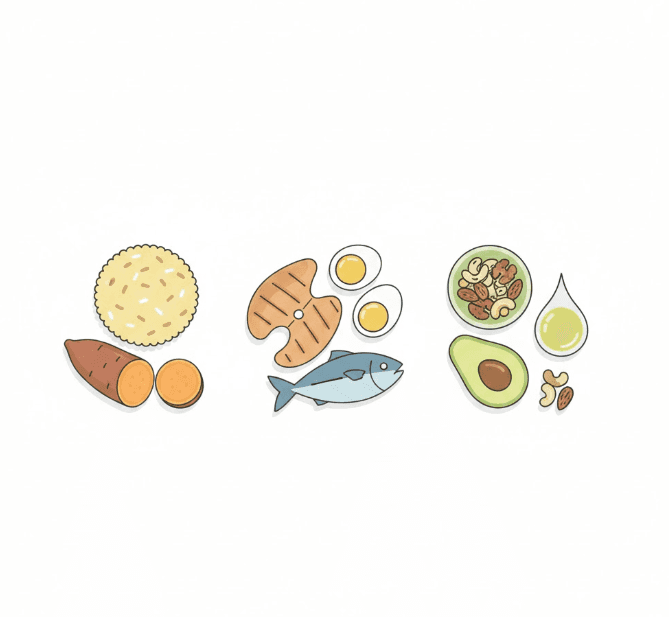
Macro Tracking for Beginners: Protein, Carbs & Fat Explained
You've probably heard fitness influencers talk about "hitting their macros" or seen apps that track more than just calories. But what exactly are macros, and why should you care about them?
Here's the truth: calorie counting tells you how much you're eating, but macro tracking tells you what you're eating. And that distinction can be the difference between losing weight while feeling energized—or losing weight while feeling like a zombie.
In this guide, you'll learn everything you need to start tracking macros today, even if you've never counted a single gram of protein in your life.
What Are Macros? The Building Blocks of Your Diet
"Macros" is short for macronutrients—the three main nutrients your body needs in large amounts to function:
- Protein – builds and repairs muscle, keeps you full
- Carbohydrates – your body's primary energy source
- Fat – supports hormones, brain function, and nutrient absorption
Every food you eat contains some combination of these three macros. A chicken breast is mostly protein. Rice is mostly carbs. Olive oil is almost entirely fat. Most foods are a mix of all three.
Macros vs. Calories: What's the Difference?
Calories measure energy. Macros measure composition.
- 1 gram of protein = 4 calories
- 1 gram of carbohydrate = 4 calories
- 1 gram of fat = 9 calories
So if you eat 150g protein, 200g carbs, and 60g fat in a day:
- Protein: 150 × 4 = 600 calories
- Carbs: 200 × 4 = 800 calories
- Fat: 60 × 9 = 540 calories
- Total: 1,940 calories
Two people could eat the exact same number of calories but have completely different body composition results based on their macro split.
Why Macro Tracking Beats Simple Calorie Counting
Calorie counting works for weight loss—eat fewer calories than you burn, and you'll lose weight. But it doesn't tell the whole story.
Here's what can go wrong with calorie-only tracking:
| Problem | What Happens |
|---|---|
| Not enough protein | You lose muscle along with fat |
| Too little fat | Hormones get disrupted, you feel terrible |
| Carbs too low | Energy crashes, brain fog, poor workouts |
| Carbs too high | Blood sugar spikes, hunger swings |
Macro tracking ensures you're not just in a calorie deficit—you're in a smart calorie deficit that preserves muscle, maintains energy, and keeps hunger manageable.
Protein Explained: The Weight Loss MVP
If you only track one macro, make it protein.
Why Protein Matters
- Preserves muscle mass during weight loss (so you lose fat, not muscle)
- Highest thermic effect – your body burns ~25% of protein calories just digesting it
- Most satiating macro – keeps you fuller longer than carbs or fat
- Supports recovery if you exercise
How Much Protein Do You Need?
For weight loss while maintaining muscle:
| Activity Level | Protein Target |
|---|---|
| Sedentary | 0.7–0.8g per lb body weight |
| Moderate exercise | 0.8–1.0g per lb body weight |
| Heavy training | 1.0–1.2g per lb body weight |
Example: A 180 lb person doing moderate exercise should aim for 144–180g of protein daily.
Best Protein Sources
- Chicken breast (31g per 4 oz)
- Greek yogurt (15g per cup)
- Eggs (6g each)
- Lean beef (28g per 4 oz)
- Fish/salmon (25g per 4 oz)
- Tofu (20g per cup)
- Protein powder (20-25g per scoop)
Carbohydrates Explained: Energy, Not the Enemy
Carbs have been unfairly demonized. Yes, you can lose weight on low-carb diets. You can also lose weight eating plenty of carbs. What matters is total calories and hitting your protein goal.
Why Carbs Matter
- Primary fuel source for your brain and muscles
- Support workout performance – especially high-intensity exercise
- Fiber (a type of carb) keeps digestion healthy and you feeling full
- Make diets sustainable – most people's favorite foods contain carbs
How Many Carbs Do You Need?
After setting protein and fat, carbs typically fill in the remaining calories:
| Goal | Carb Approach |
|---|---|
| General weight loss | Moderate carbs (40-50% of calories) |
| Very active/athlete | Higher carbs (50-60% of calories) |
| Prefer higher fat foods | Lower carbs (20-30% of calories) |
There's no single "right" amount—it depends on your preferences and what keeps you consistent.
Smart Carb Choices
Prioritize: Oats, rice, potatoes, fruits, vegetables, whole grain bread, beans
Limit: Sugary drinks, candy, pastries (they spike blood sugar without keeping you full)
Fat Explained: Essential, Not Optional
Dietary fat doesn't make you fat—excess calories do. Fat is essential for:
Why Fat Matters
- Hormone production – including testosterone and estrogen
- Brain health – your brain is ~60% fat
- Absorbing vitamins – vitamins A, D, E, and K need fat to absorb
- Satiety – fat slows digestion and keeps you satisfied
How Much Fat Do You Need?
Most people do well with 0.3–0.5g of fat per pound of body weight.
Minimum: Never go below 0.25g per pound—your hormones will suffer.
Example: A 160 lb person needs at least 48g of fat daily, ideally 48–80g.
Healthy Fat Sources
- Avocado (21g per whole avocado)
- Olive oil (14g per tablespoon)
- Nuts/almonds (14g per ounce)
- Salmon (13g per 4 oz)
- Eggs (5g each)
- Cheese (9g per ounce)
How to Calculate Your Macros: Step-by-Step
Ready to find your numbers? Here's the simple process:
Step 1: Find Your TDEE (Total Daily Energy Expenditure)
Your TDEE is how many calories you burn daily, including exercise. Use a TDEE calculator or this formula:
Mifflin-St Jeor Equation:
- Men: (10 × weight in kg) + (6.25 × height in cm) – (5 × age) + 5
- Women: (10 × weight in kg) + (6.25 × height in cm) – (5 × age) – 161
Multiply by your activity factor:
- Sedentary: × 1.2
- Light activity: × 1.375
- Moderate: × 1.55
- Very active: × 1.725
Step 2: Set Your Calorie Target
- Lose weight: TDEE minus 300-500 calories
- Maintain: Eat at TDEE
- Gain muscle: TDEE plus 200-300 calories
Step 3: Calculate Protein
Aim for 0.8-1g per pound of body weight.
Example: 170 lbs × 1g = 170g protein = 680 calories from protein
Step 4: Calculate Fat
Aim for 0.35g per pound of body weight.
Example: 170 lbs × 0.35g = 60g fat = 540 calories from fat
Step 5: Fill Remaining Calories with Carbs
Example:
- Target calories: 2,000
- Protein calories: 680
- Fat calories: 540
- Remaining for carbs: 2,000 – 680 – 540 = 780 calories
- Carbs in grams: 780 ÷ 4 = 195g carbs
Final macros: 170g protein / 195g carbs / 60g fat
5 Common Macro Tracking Mistakes (And How to Avoid Them)
1. Obsessing Over Perfection
You don't need to hit your macros exactly. Aim for ±5g on protein and ±10g on carbs/fat. Close is good enough.
2. Not Weighing Food
Eyeballing portions is notoriously inaccurate. A food scale costs $15 and eliminates guesswork.
3. Forgetting Cooking Oils
That "healthy" stir-fry? Two tablespoons of oil adds 240 calories and 28g of fat. Track everything.
4. Ignoring Protein Timing
While total daily protein matters most, spreading it across 3-5 meals (25-40g each) optimizes muscle protein synthesis.
5. Making It Too Complicated
You don't need 47 different foods. Find 10-15 meals you enjoy that fit your macros, and rotate them.
How AI Makes Macro Tracking Effortless
Let's be honest: manually calculating macros, planning meals, and adjusting targets when progress stalls is tedious.
This is where AI-powered nutrition apps change the game. Instead of:
- Calculating your own TDEE
- Manually building meal plans
- Guessing when to adjust calories
- Tracking every gram yourself
An adaptive AI coach can:
- Calculate your targets based on your body, goals, and activity level
- Generate personalized meal plans using foods you actually like
- Track your weight trends and detect plateaus early
- Automatically adjust your macros when progress slows
The result? You focus on eating and living—the app handles the math.
Getting Started: Your First Week of Macro Tracking
Here's your action plan:
Day 1-2: Calculate your macros using the steps above (or use an app)
Day 3-4: Track everything you currently eat—don't change anything yet. Just observe.
Day 5-7: Start adjusting meals to hit your protein target first. Don't worry about perfection.
Week 2+: Fine-tune carbs and fat. Find meals that work. Build consistency.
The goal isn't perfect tracking forever. It's building awareness of what you eat so you can eventually eat intuitively while staying on track.
FAQ
Q: Do I need to track macros forever?
No. Most people track strictly for 2-3 months to build awareness, then transition to intuitive eating with occasional check-ins. Think of it as training wheels.
Q: Can I eat anything if it fits my macros (IIFYM)?
Technically yes, but practically you'll feel better eating mostly whole foods. A diet of protein bars and candy might "fit," but you'll be hungry, tired, and nutritionally deficient.
Q: What if I go over my macros one day?
Nothing bad happens. One day doesn't ruin progress. Look at your weekly averages, not daily perfection. Consistency over time is what matters.
Q: Should I track on weekends?
Yes, at least initially. Weekends are where most people unknowingly undo their weekday progress. Track to stay aware, even if you're more relaxed with targets.
Q: Is macro tracking good for building muscle too?
Absolutely. For muscle gain, you'd eat at a slight calorie surplus while keeping protein high (1-1.2g per pound). The principles are the same—just different calorie targets.
Conclusion
Macro tracking isn't about obsession or restriction—it's about understanding what you eat so you can make informed choices.
Start simple: calculate your numbers, prioritize protein, and track consistently for a few weeks. You'll quickly learn which foods help you hit your targets and which ones make it harder.
And if the math feels overwhelming? That's exactly why AI-powered meal planning exists. Let technology handle the calculations while you focus on what matters: eating well, feeling good, and making progress toward your goals.